Torredembarra
Torredembarra is a town full of life, and has a good lineup of festivals, both local and national and traditional, which extends throughout the year, such as:
- January 20: Sant Sebastià - Festa Major in the Sant Jordi neighborhood
- Around February: Carnival
- April 23: Sant Jordi - day of the rose and the book
- June 24: Sant Joan - Baix a Mar Festival (Seaside District)
- July 15: Feast of the Picture of Santa Rosalia (small town festival)
- September 4: Santa Rosalia, the town's main festival
- September 11: National Day of Catalonia
One of the facets that makes Torredembarra an essentially Mediterranean and Catalan town is the celebrations and the way traditions have been maintained and recovered. Nowadays, Torredembarra has a very extensive popular following, thanks to the people of the town, young and old, who have helped to recover different popular dances that had been lost. Thus, the popular entourage of Torredembarra consists of: Colla castellera 'Els Nois de la Torre', Ball of devils, the Virgília (dragon), the Eagle, Ball of Sticks, Ball of Shepherds, Ball of Horses, Ball of Serrallonga, the dwarfs and the giants: Joan and Rosalia.
You can consult updated information at https://www.baixgaiaturistic.cat about general information about Baix Gaià.
Torredembarra beach
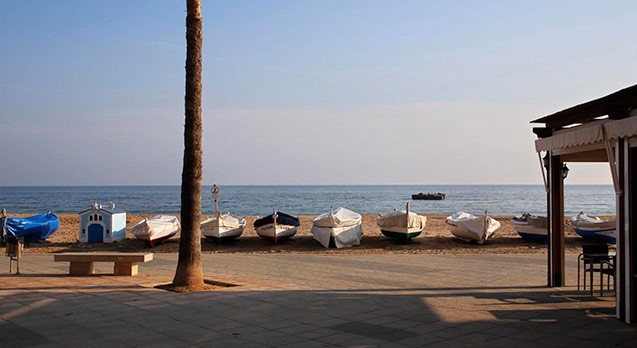
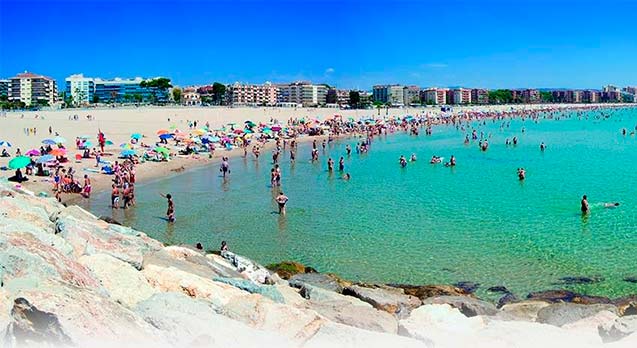
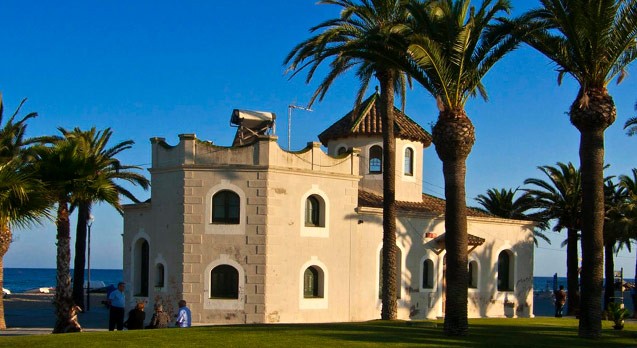
The main entertainment in the summer, both for the people of the town and for the visitors, is to go to the beach, and enjoy the different spaces and landscapes that Torredembarra beach has to offer.
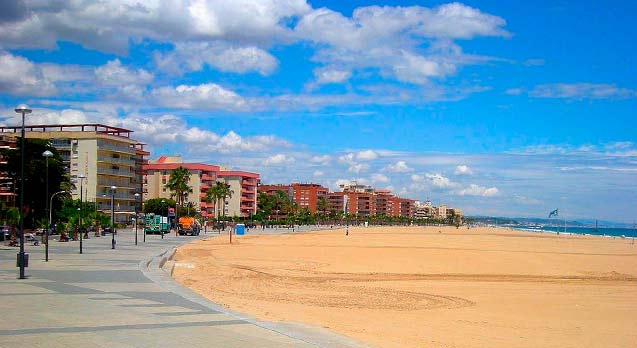
The Paella beach, closest to the Marina and which has an area with the necessary equipment for practicing different sports, without having to give up a dip from time to time. Especially in the summer, different tournaments and championships are organized which are very well received and which have a great participation, especially by the young people of the town. We must also say that this area of the beach is the widest, and can measure up to 90 meters in some places.
The beach of the maritime district, of less width, is located in the old fishermen's quarter, and also has some facilities for practicing tennis or beach volleyball.
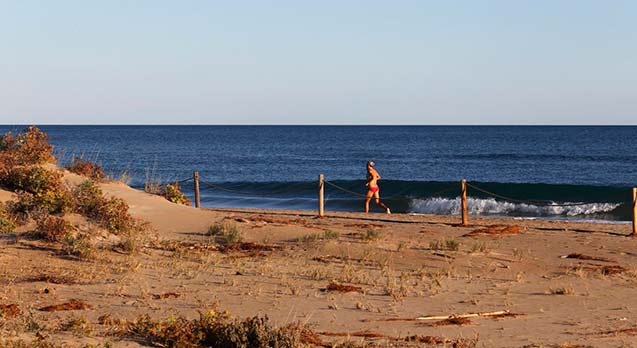
The Muntanyans beach, with an average width of 85 meters, and which has mountain and salt marshes, with its typical flora and fauna. This beach is included in the PEIN (Plan d'Espais d'Interès Natural) of the Generalitat de Catalunya.
The beach of Torredembarra usually obtains the best rating, the blue flag, year after year, which ensures hygiene and the attention given to the maintenance, daily in the summer, of the beach, which makes the sand and water remain free of debris.
what to visit
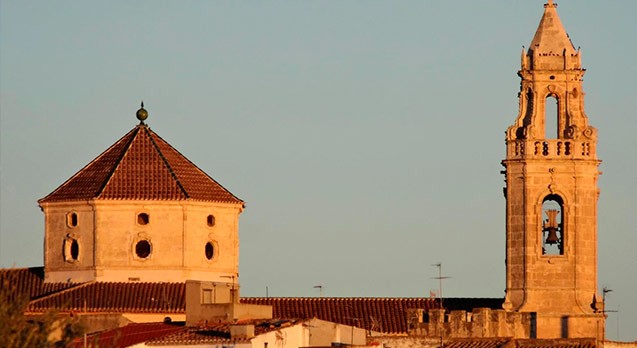
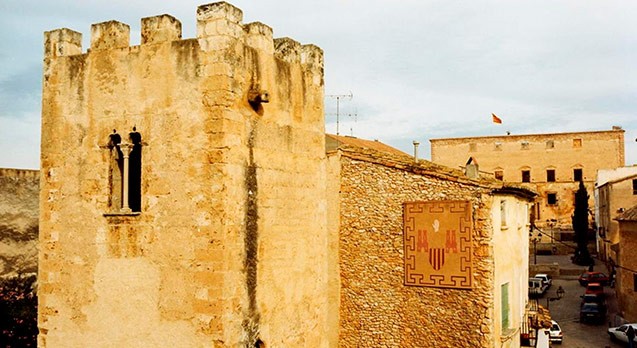
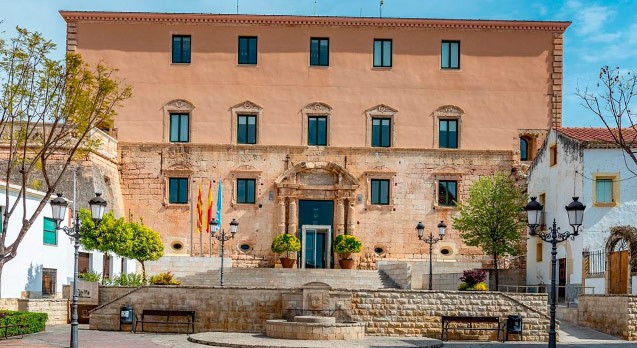
The old town of Torredembarra, of great historical importance, stands out for its constructions, such as Castell dels Icard, from the mid-16th century and which is the only new-floor castle from the Catalan Renaissance that is preserved in Catalonia, the Torre de la Villa, from the s. XII or XIII, and Mudejar style, the Parish Church of Sant Pere, which was completed in 1680, although some architectural elements were finished in 1705 and 1771-1778. Inside the church, the Picture of Santa Rosalia, which saved the town from the plague epidemic, and the Baroque organ stand out. In the old town, the Portal de Padrines and the Portal de la Bassa are also noteworthy, remnants of the old wall that surrounded the town in the 17th century.
In the maritime district, Baix a Mar, we find the old fishermen's market or Societat Industrial de Pesca: 'El Pes', from 1929, and which is located on the promenade. In Carrer Indústria we can also find the modernist building of the Maritime Cooperative, from the 19th century.
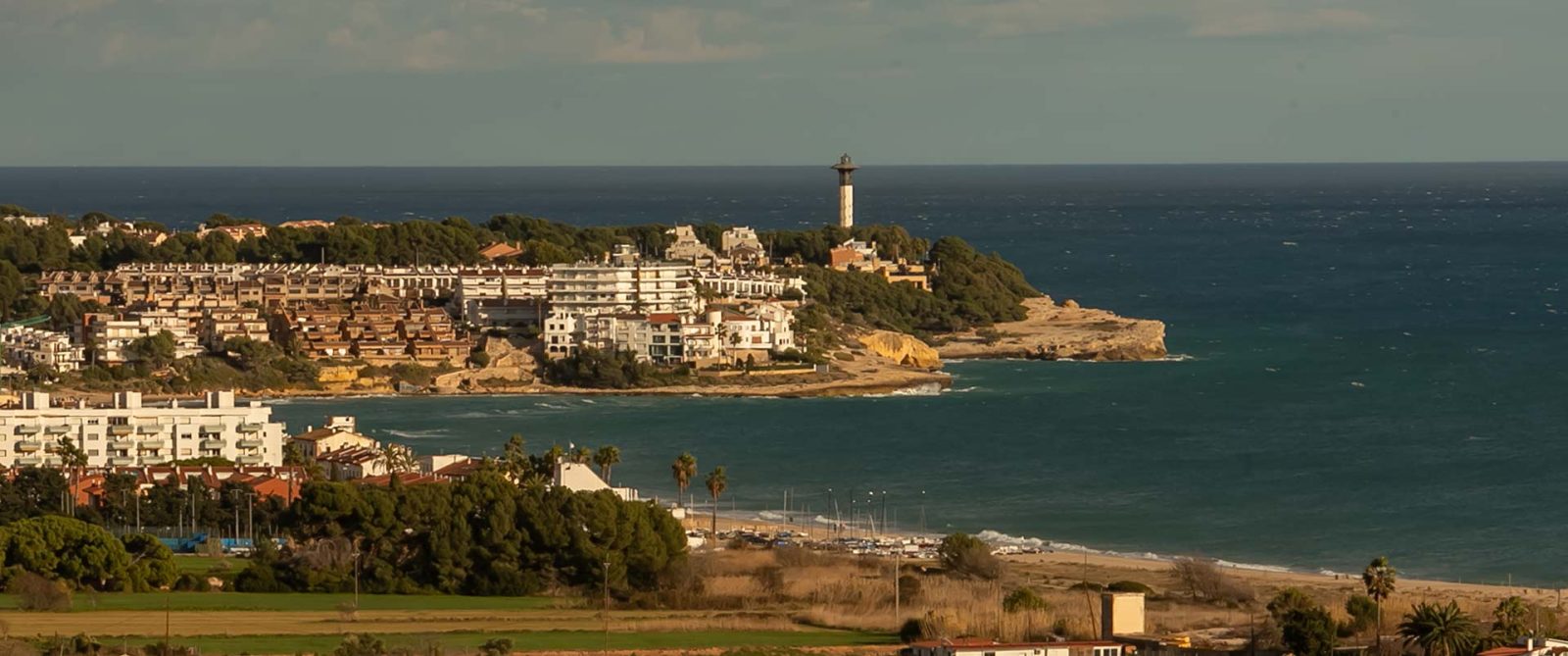
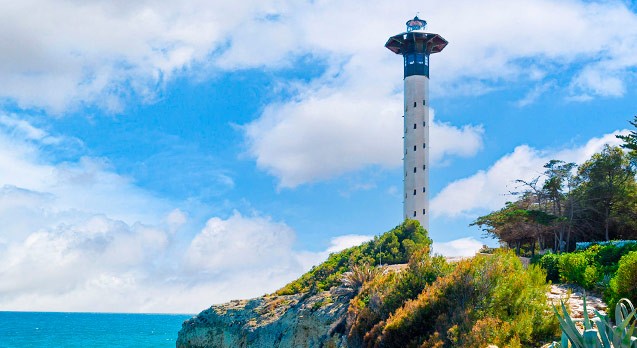
From the maritime district we can take the promenade, which will take us to the Marina, bordering a large part of the extensive Torredembarra beach. The marina is of recent construction, and has 820 moorings. Very close to the port, we find the last lighthouse that was built in Spain during the 20th century, and which was inaugurated on January 1, 2000. It is worth saying that the Torredembarra lighthouse is the one with the tallest tower of all the lighthouses in Catalonia, surpassing that of the Llobregat by 7m. The town's areas of natural interest are: Els Muntanyans beach, a typical natural beach of the Catalan coast, where we find well-preserved dunes (muntanyans) and salt flats (marshes); el Roquer, between Paella beach and Canyadell beach, with its impressive cliffs; The Antines: the underwater rock bars, which consist of three rock bars, at different distances from the coastline, and which leave, in a north-easterly direction, from in front of what is now Torredembarra train station .
Torredembarra is a very well-connected tourist and commercial town: by road (N-340), by motorway (A-7, exit 32) and by train. With a privileged situation, in the heart of the Costa Daurada, it is a short distance from the city of Tarragona, known for its Roman legacy; Reus, Gaudí's hometown, with its Modernista route, and about 80 km. from Barcelona. Its diverse environment ranges from the natural charm of the Delta de l'Ebre, the Císter route - which covers the most important Cistercian monasteries in the province of Tarragona - and medieval Montblanc, to the livelier nightlife of Salou and the Pineda
Torredembarra
Torredembarra is a very well-connected tourist and commercial town: by road (N-340), by motorway (A-7, exit 32) and by train. With a privileged situation, in the heart of the Costa Daurada, it is a short distance from the city of Tarragona, known for its Roman legacy; Reus, Gaudí's hometown, with its Modernista route, and about 80 km. from Barcelona. Its diverse environment ranges from the natural charm of the Delta de l'Ebre, the Císter route - which covers the most important Cistercian monasteries in the province of Tarragona - and medieval Montblanc, to the livelier nightlife of Salou and the Pineda